

Why Use
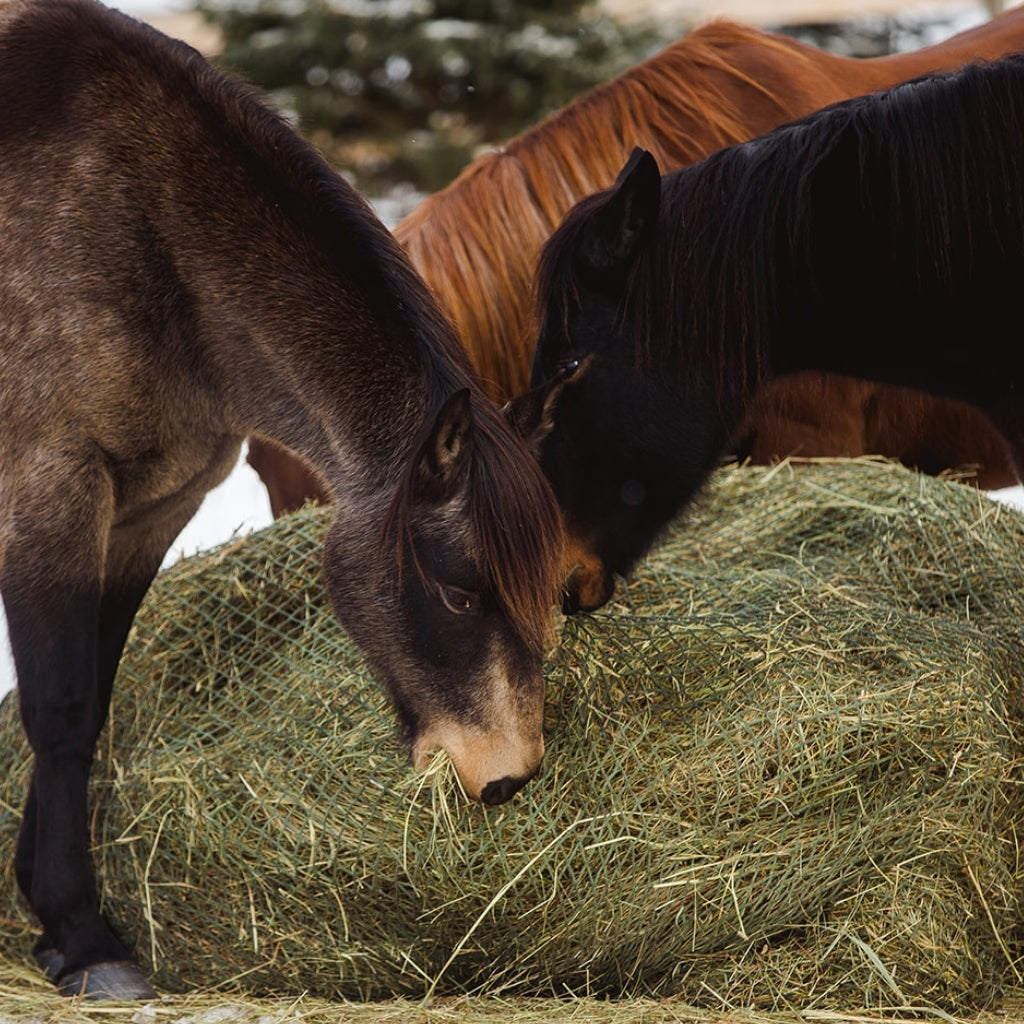
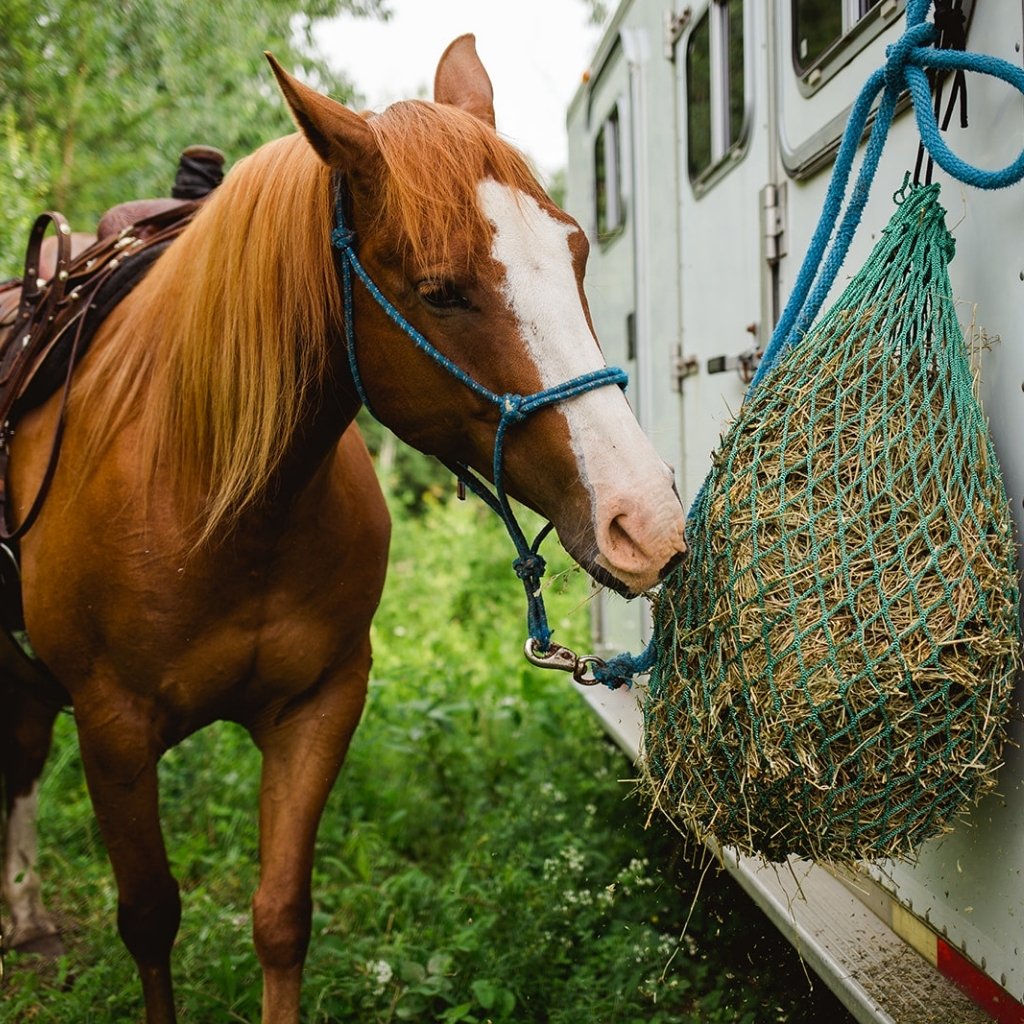
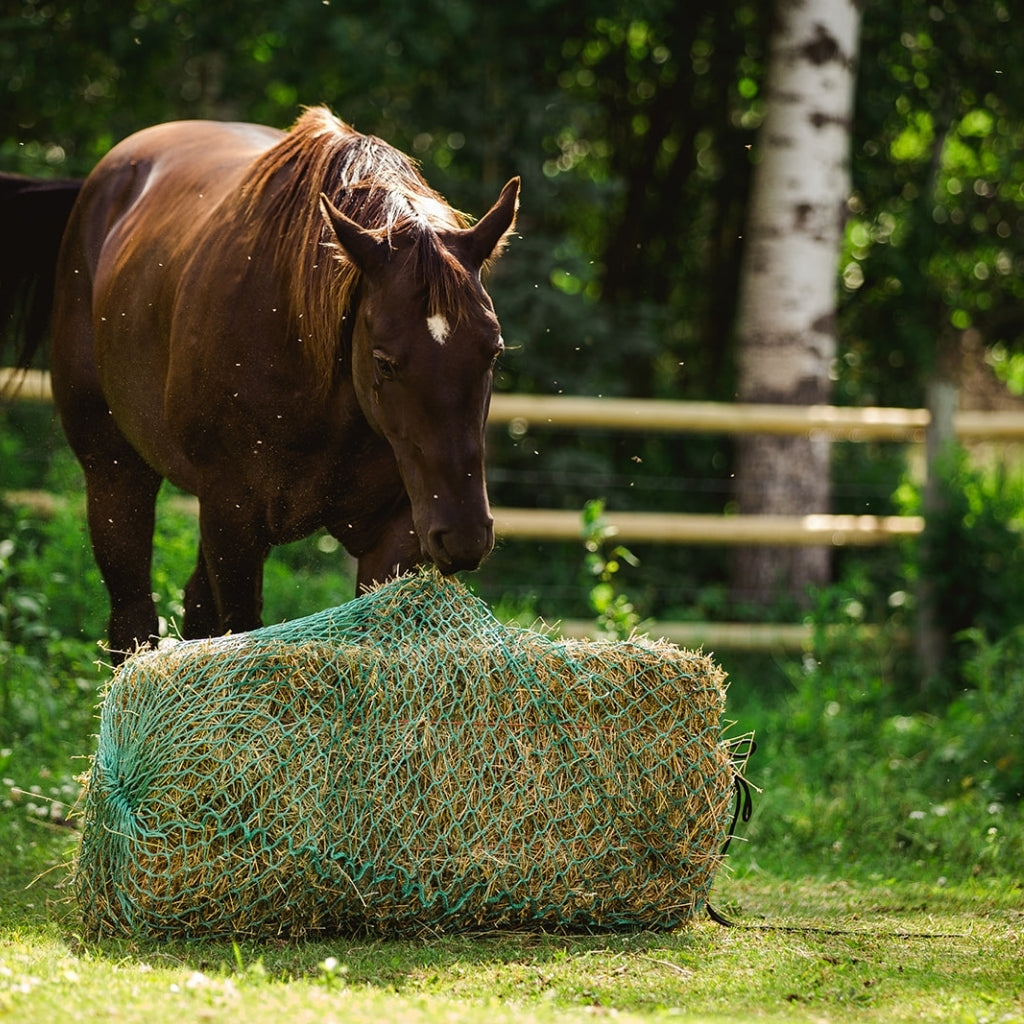
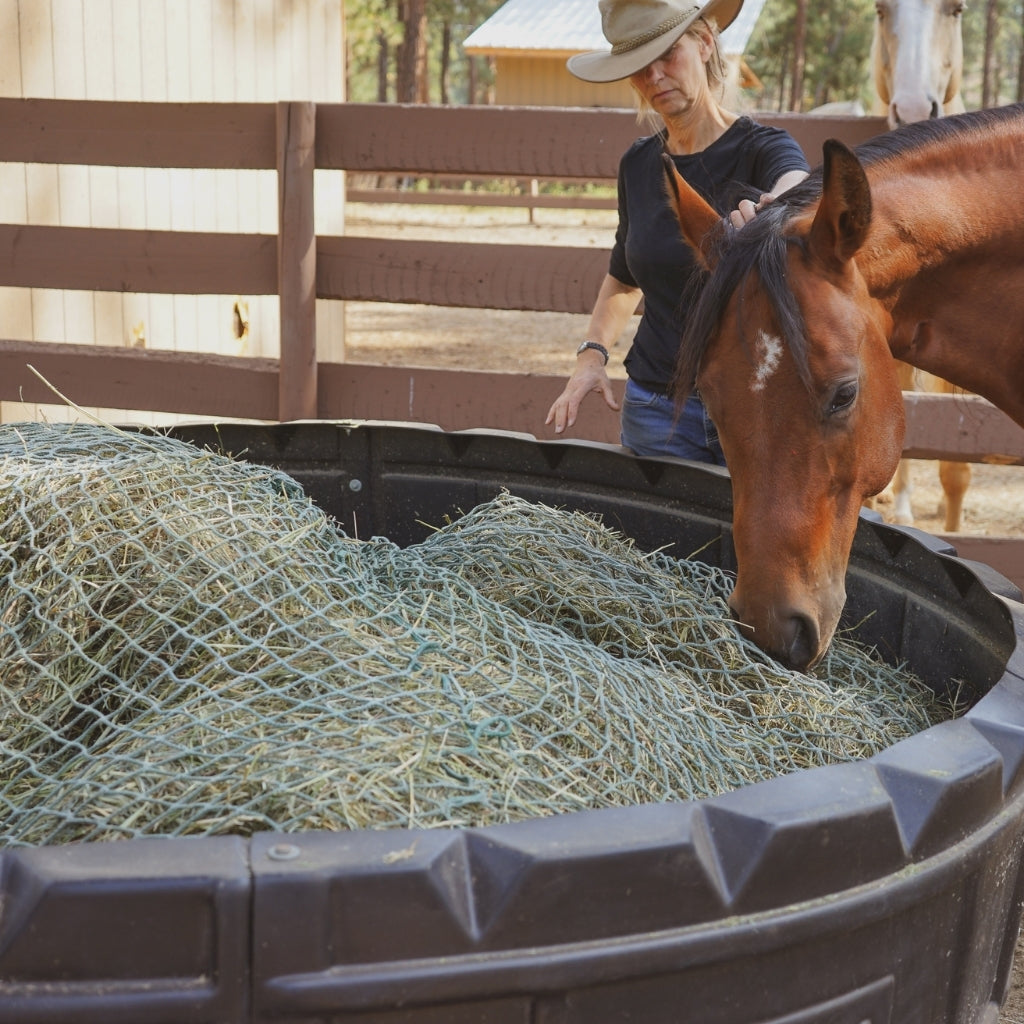
Hay nets (slow feeding) are considered the best feeding method for most grazing animals with limited access to pasture. Although slow feeding is widely recognized for its numerous advantages, the primary benefits for equines are particularly significant.
On average, horses engage in foraging behavior for about 13 to 15 hours a day when they have free access to food. Horses have small stomachs that are designed for frequent, small meals. When their access to pasture or forage is restricted, they become susceptible to various health and behavioral issues. The common practice of providing "two flakes of hay, twice a day" does not meet the grazing needs of equines.
A horse's stomach continuously produces hydrochloric acid. When a horse chews and eats, it produces saliva, which can amount to up to 30 liters per day. Saliva not only helps to lubricate food but also neutralizes the effects of stomach acid. However, when fiber is not consumed, saliva production decreases, leading to acid buildup in an empty stomach. This condition can result in the formation of ulcers, which may cause symptoms like cribbing or colic, as well as behavioral issues such as bucking, rearing, and pinned ears.
"I wish I had bought these sooner!... I've been using Nag Bags slow feeders for about 4 months, which is so great!! It really saves me time and money! No more soiled hay on the ground to scrape and pick up! And my horses are so calm because they don’t have an empty stomach!"